

Whether you're hitting the trails for the first time or brushing up on the basics, this guide is your ticket to two-wheeled adventure, Mongoose style.
As the brand that was born in dirt, we’ve been putting riders on two wheels and encouraging them to push their limits for over five decades and counting now. Dirt’s in our DNA, so we’re stoked to share some of the knowledge we’ve built up over the years. Now get ready to hit the trails!
What are the different types of mountain bikes?
The two main types of mountain bikes are hardtails and full-suspension bikes. From there, mountain bikes are designed for different riding styles, including cross-country (XC), trail, downhill, dirt jump, and fat biking. The best MTB type depends on where you ride and the kind of terrain you want to tackle.
Which type of mountain bike should I get?
Choosing the right mountain bike can feel overwhelming, but it really comes down to how and where you plan to ride. The biggest question you’re likely to face is the eternal debate: hardtail or full suspension? The difference between these mountain bike types is simple, but it’s a huge difference in price and technology. While there’s a ton of arguments for and against both, your choice will pretty much depend on the style you want to ride. Consider your riding style and terrain. Are you looking to ride downhill descents or long cross-country trails? Do you dream of ripping through rocky terrain or cruising along smooth singletrack? This is the biggest thing to consider when it comes to hardtail vs. full suspension since they each excel on different kinds of trails.

Hardtail Mountain Bikes
Hardtail mountain bikes feature a rigid frame without rear suspension, relying only on the suspension fork to soak up bumps and improve handling.
With a rigid frame, hardtails are lightweight, efficient, and easy to maintain. They climb well, feel fast on smoother trails, and are typically more affordable than full-suspension bikes. Their simple design and predictable handling make them a popular choice for riders who are new to mountain biking.
 Full-Suspension Mountain Bikes
A full-suspension mountain bike (also called a dual-suspension bike) features both a suspension fork and a rear shock. If you're planning to ride rougher terrain, a full-suspension bike is the way to go.
The rear suspension improves comfort, traction, and control by helping the bike absorb rocks, roots, jumps, and other trail obstacles. That added capability inspires confidence on technical trails, though it also comes with a more complex frame design and some additional maintenance. For riders who want to go all out though, the extra suspension is well worth it.
Hardtail vs. full-suspension: Which one is right for you?
For many riders, choosing between a hardtail and full-suspension mountain bike comes down to terrain, budget, and riding goals.
Choose a hardtail if you want:
- A lighter, simpler bike
- Better climbing efficiency
- Lower cost and easier maintenance
- A great platform to learn mountain biking skills
Choose full suspension if you want:
- More comfort on rough trails
- Better traction over rocks and roots
- More confidence on technical descents
- A bike built for aggressive trail riding
Mountain bike styles and riding disciplines
Now that you understand the major types of mountain bikes, let’s look at the riding styles each one is built for. From cross-country racing to downhill shredding, there's a style of riding for all every rider.

Cross-Country (XC)
Picture yourself rolling through pristine forests and rolling hills for miles on end. That's the essence of cross-country riding: covering long distances on relatively smooth trails with a focus on endurance, efficiency, and speed.

Trail
Trail riding is one of the most popular styles of mountain biking because it offers a little bit of everything. Trail bikes are designed to handle the climbs, descents, roots, and rocks found on singletrack trails with a balanced mix of speed, comfort, and control.

Downhill
Strap on your full-face helmet and get ready to let gravity do your dirty work. Downhill riding is exactly what it sounds like: bombing down steep, rocky trails at high speeds. Downhill bikes use long-travel suspension to handle big impacts and technical terrain.

Enduro/All-Mountain
Ready to ride the whole mountain? Enduro riding combines long climbs with technical descents challenging terrain. Enduro bikes are designed to handle demanding descents while still being efficient enough to pedal back to the top.

Dirt Jump/Freeride
Dirt jump bikes are all about big air and tricks on specially designed courses. Riders use specially built courses featuring a series of jumps, berms, rollers, ramps, bridges, and other features. Think of it like mountain bikes meet BMX freestyle.

Fat Bike
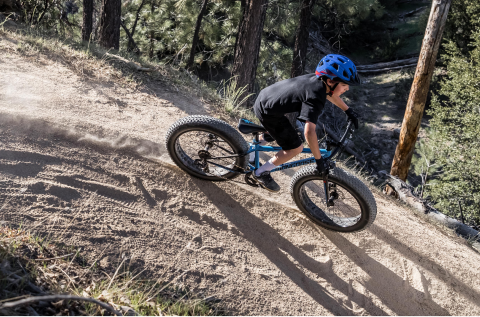
For riders who want to extend the riding season and ride terrain too soft and sketchy for regular mountain bikes, there’s the fat tire bike. With extra-wide tires, they not only look monstrously rad, but they also power through mud, sand, and snow with tons of traction.

Mountain bike features to consider
Once you know what type of mountain bike fits your riding style, it’s time to compare the features that affect how a bike rides, and how much it costs.
Wheel Size
Most modern adult mountain bikes come with either 27.5-inch or 29-inch wheels. Many riders choose 29-inch wheels for their ability to carry momentum and roll over obstacles, while 27.5-inch wheels can feel more agile and maneuverable, and are better paired with smaller size bikes. Mountain bikes for kids and teens also come in smaller wheel sizes like 20-inch, 24-inch and 26-inch.
Suspension Travel
Suspension travel refers to how much movement a bike’s suspension provides. More travel generally means better performance on rough, technical terrain, while less travel helps keep bikes lighter and more affordable and is well suited for smoother trails. Some forks also feature a “lockout” switch which essentially lets you turn the travel on or off: cushioned suspension for downhill, and rigid for efficient climbs.
Dropper Post Compatibility
A dropper post allows riders to adjust their seat height with the push of a lever, making it easier to move around the bike during climbs, descents, and technical sections. Even if a bike doesn’t include one, dropper post routing allows for an upgrade later.
Frame Material
Most mountain bikes use aluminum frames because they provide a good balance of strength, weight, and affordability. Higher-end bikes may use materials like carbon fiber to reduce weight and increase performance, but they’re much more expensive and require more care.
Upgrade Potential
Even if a bike doesn’t have all the premium components on day one, as long as the frame includes features like dropper post cable routing and a tapered headtube, you’ll likely be able to make those upgrades later. The Mongoose Switchback is a perfect example of a bike that’s been futureproofed in this way, making it a ride that can truly grow with you as you elevate your skills.

Frequently Asked Questions
Which type of mountain bike is best for beginners?
For most beginners, a hardtail mountain bike is a solid place to start. Hardtails are affordable, easy to maintain, and provide a great way to learn essential mountain biking skills. Riders planning to take on rougher, more technical trails may want to consider a full-suspension mountain bike for added comfort and control.
Is a hardtail or full suspension mountain bike better?
The right choice depends on where you ride. Hardtail mountain bikes are more efficient for climbing and smoother trails, while full-suspension bikes provide more control and comfort on rocky, technical terrain.
What is the difference between XC and trail mountain bikes?
Cross-country (XC) mountain bikes are designed for efficiency, speed, and covering longer distances, with an emphasis on climbing and endurance. Trail mountain bikes are built for a wider variety of terrain, balancing climbing ability with improved downhill control and handling, typically with more suspension travel for singletrack trails.
Are mountain bikes different for men and women?
In general, mountain bikes aren't designed differently for men and women. The right bike depends more on factors like rider height, fit, riding style, and personal preference. Some bikes may offer geometry or components that appeal to different riders, but these aren't strictly gender-specific.


